| |
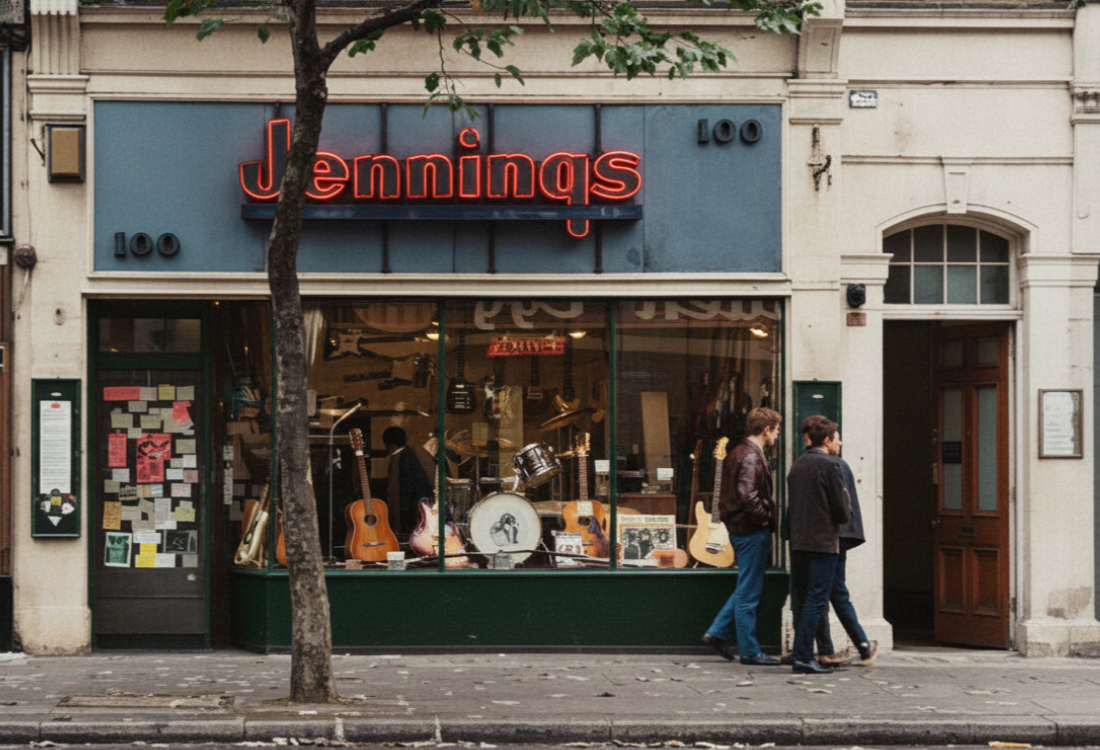
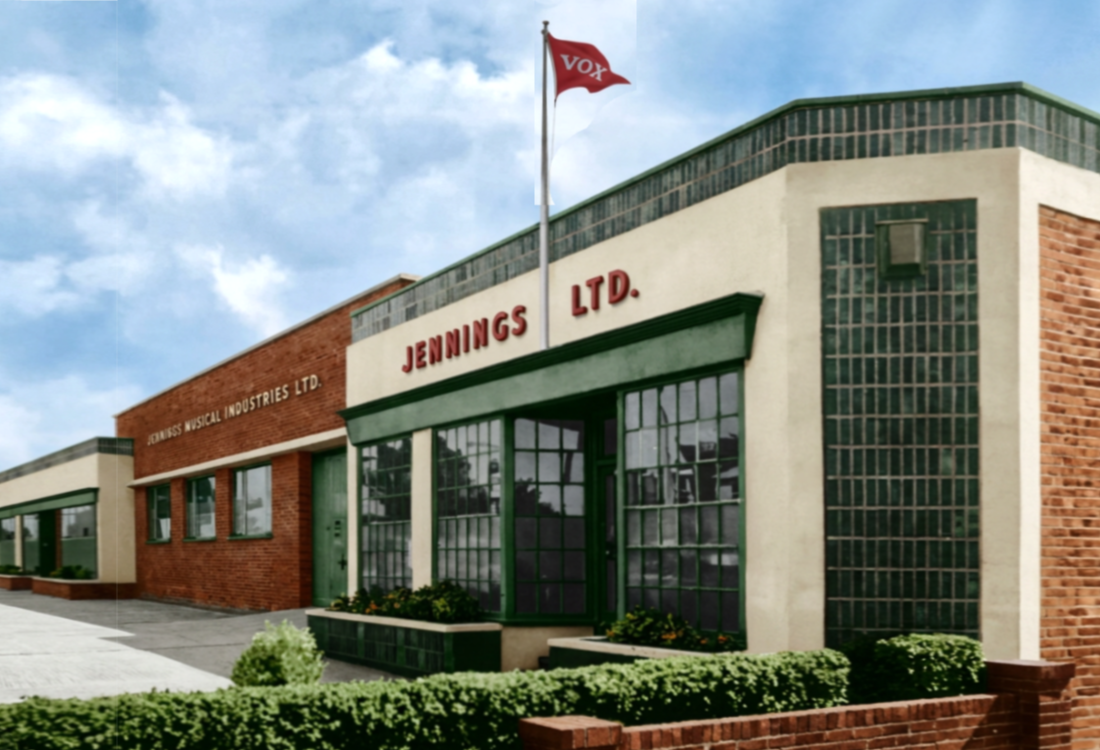
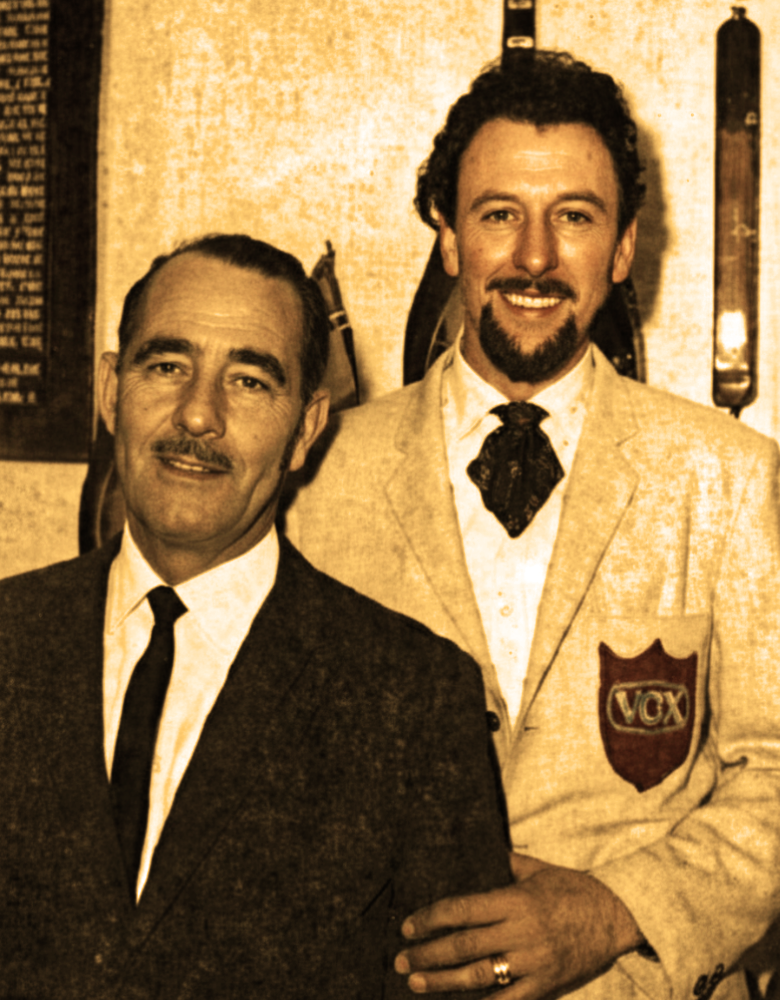
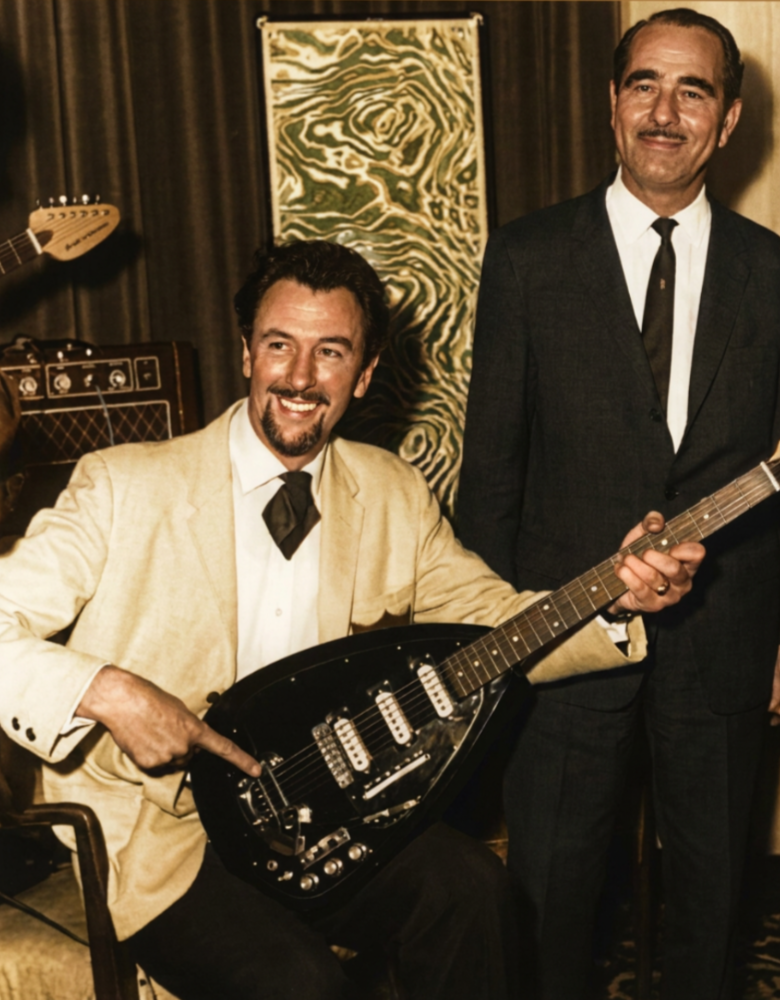
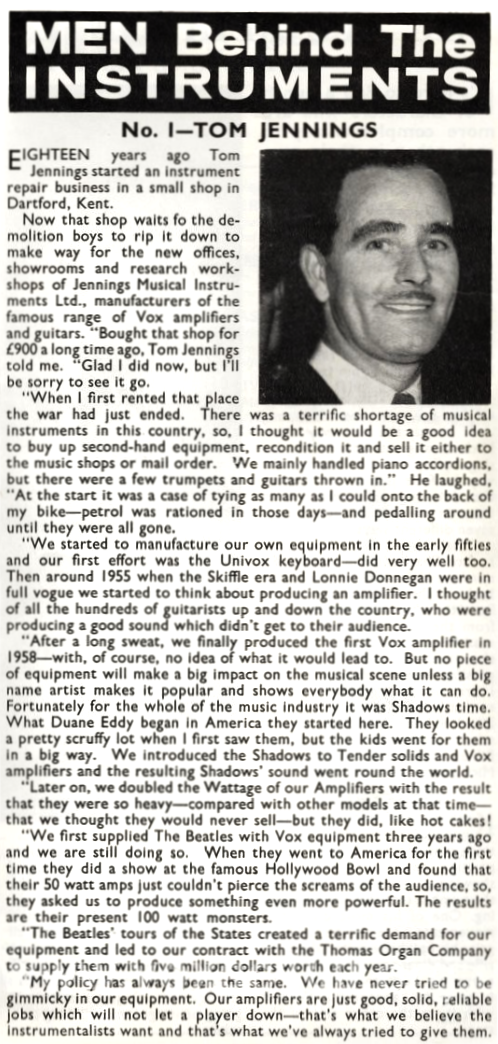
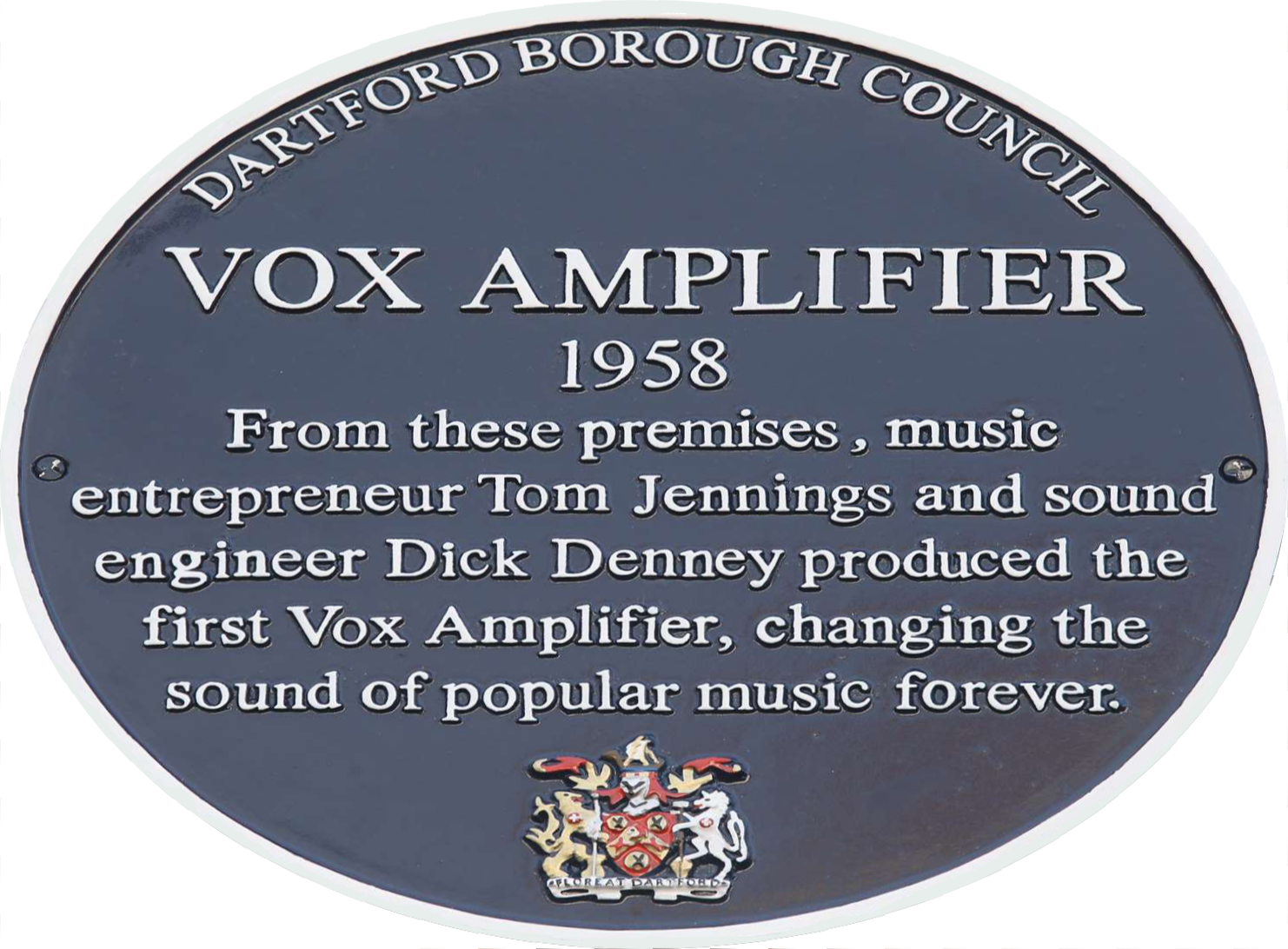
The Board of Trade embargo on American luxury goods was finally lifted in 1960, and the American guitars that British rock 'n 'rollers lusted after started to appear in the UK. At the same time there was a growing market for more powerful amplifiers and PA systems to cope with bigger venues. Engineers like Charlie Watkins, Jim Marshall and Dick Denney at Jennings started to evolve the equipment that would make the "British Invasion" heard around the world and earn them their place in rock 'n' roll history. In order to increase their market, JMI engaged Thomas Organs to distribute to the American market, and as a result of this, JMI had problems meeting the increased demand for their equipment and, during 1964, Jennings sold a controlling interest in the company to Royston Industries to finance increased production facilities and product range expansion. The JMI brand continued to be used on the range of VOX products.
The manufacturing base was moved to Erith, Kent, where the UL amplifier series (705, 715, 430, 730, 460, 760, 4120 and 7120) and the solid state models (Traveller, Virtuoso, Conqueror, Defiant, Supreme, Dynamic Bass, Foundation Bass and Super Foundation Bass) were made. Even so, by 1966, Thomas Organs, not getting enough product to fulfil their US orders, started to construct VOX amplifiers themselves. These were sold with rather strange "British" names such as Viscount, Essex, Westminster, Royal Guardsman and Buckingham. Their flagship product was a 100-watt amplifier that was christened Super Beatle. By 1967 Tom Jennings had been removed and Denney had left the company, which filed for bankruptcy in 1968. During the bankruptcy proceedings some of the former JMI management were permitted to resume production of the more recently introduced solid state amplifier designs under the name VOX Sound Equipment Ltd (VSEL). Although some hand-wired AC-30 and AC-50 amplifiers were made, no other new models were introduced and they had a problem with the fact that the solid-state amps just didn't sound the same as their valve-based siblings. The company name was shortened to VOX Sound Limited (VSL) and itself filed for bankruptcy in 1969. During this bankruptcy period the company assets were held by the British banking firm Corinthian Securities and the only new product produced was an updated version of the Jaguar organ which was marketed under the name Corinthian. VOX was purchased by Birch-Stolec Industries in 1970 and the manufacturing base was again moved, this time to Hastings in Essex. Birch Stolec were the owners of Lemark Transformers who were one of the major creditors from the VSL bankruptcy. They retained the VSL brand under which they produced the V100 Head (a 100 watt, printed circuit, all tube amplifer) and PC board-based versions of the AC-30 and AC-50. Also produced at this time were minor version revisions of the solid state VOX amplifiers originally produced by JMI in 1967.
Former bass guitarist of the Dave Clark Five, Rick Huxley, became the sales manager for the new productions, and in 1973 Dallas Musical Industries (Dallas Arbiter), who produced the Sound City amplifier, bought VOX from Birch-Stolec. They replaced the PC board AC-30 and AC-50 amplifiers (which had a number of problems), with hand wired models rather similar to the original JMI designs. DMI also introduced the AC-120 and Escort 30 amplifiers.
|
|


 ·
· Last Name