
Dick Denney

|
Dick Denney |
|
First Name · · Last Name·
Groups·
Venues·
Events·
Entities·
Submit·
e-Mail·
Links·
Search
Last Name·
Groups·
Venues·
Events·
Entities·
Submit·
e-Mail·
Links·
Search |
 |
  |
  ROCKHAPPENZ Public Collection |
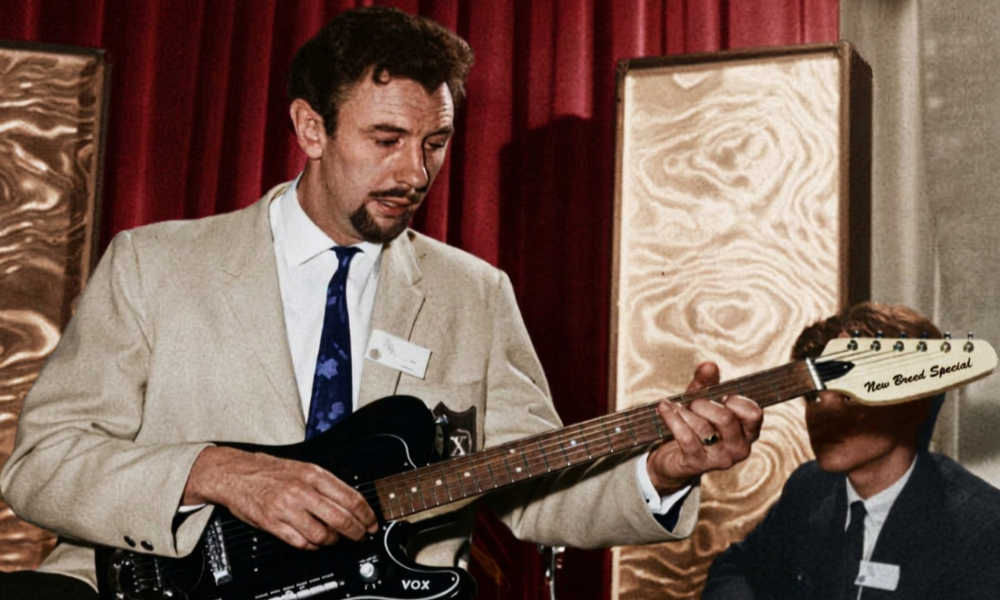
Dick Denney — Designer of the VOX AC15 and AC30 Guitar Amplifiers ..... |
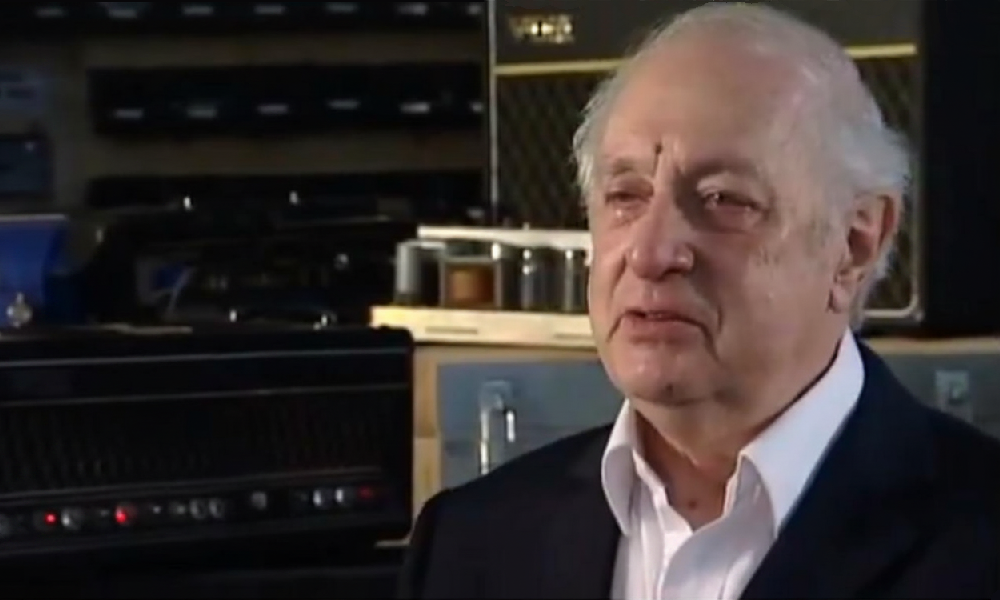 Derek Underdown |
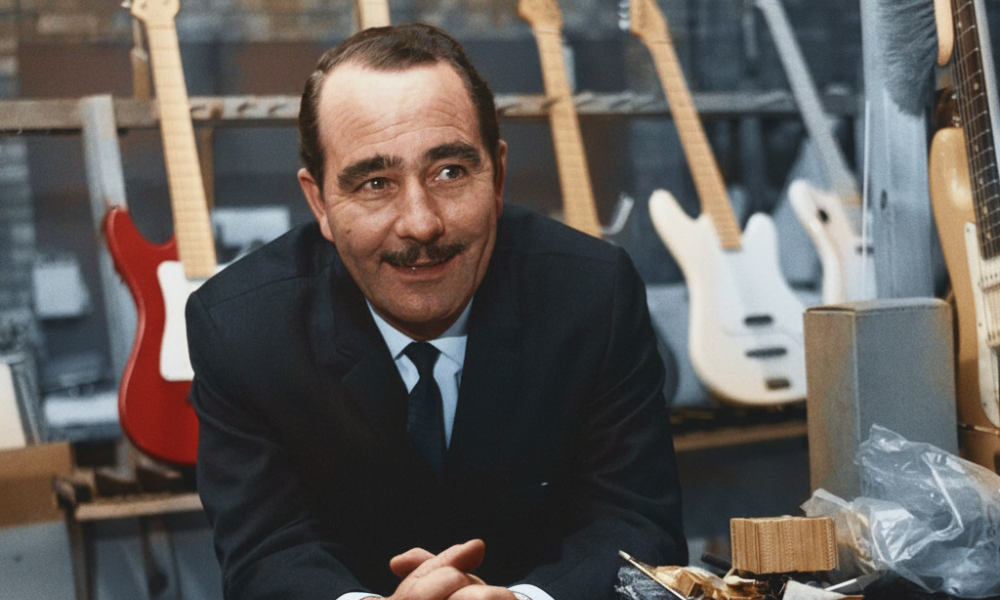 Tom Jennings |
A guitarist himself, Dick Denney had his finger on the pulse of the rapidly evolving world of the electric guitar in the late 1950's and worked tirelessly with JMI staff to design an amplifier that could offer the volume and sustain that guitarists of the time were craving. The result of their work was introduced to the world in January of 1958. This amplifier was dubbed the AC1/15, marking the very first appearance of the VOX name on a guitar amplifier, and thus beginning an institution that has thrived for close to 70 years. Later shortened to the AC15, this amplifier quickly became the choice of London's top guitarists, including Vic Flick who used an AC15 on his iconic recording of the James Bond Theme which featured in the 1962 Dr. No movie. |
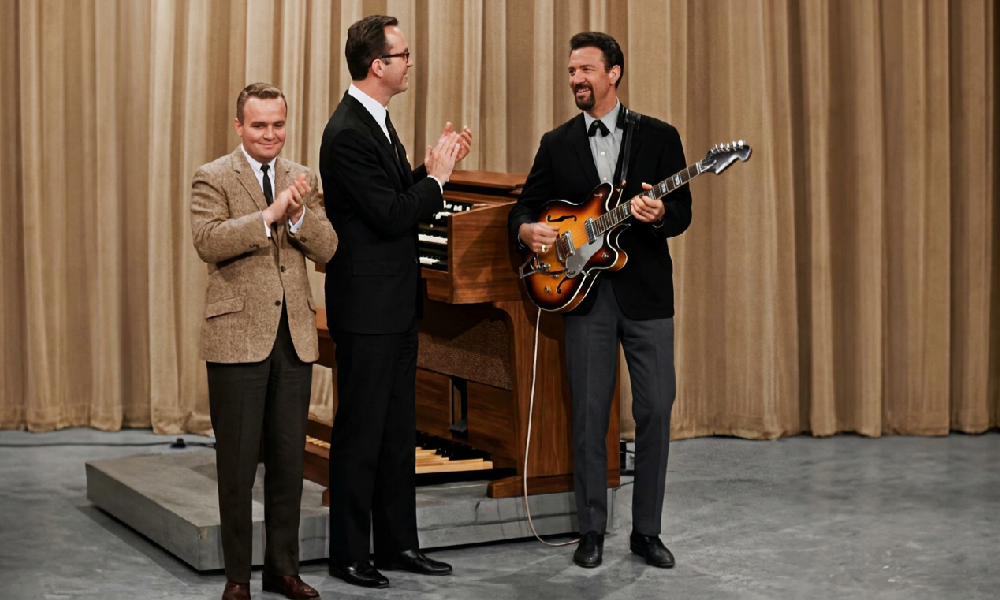 Dick Denney on national television in the USA |
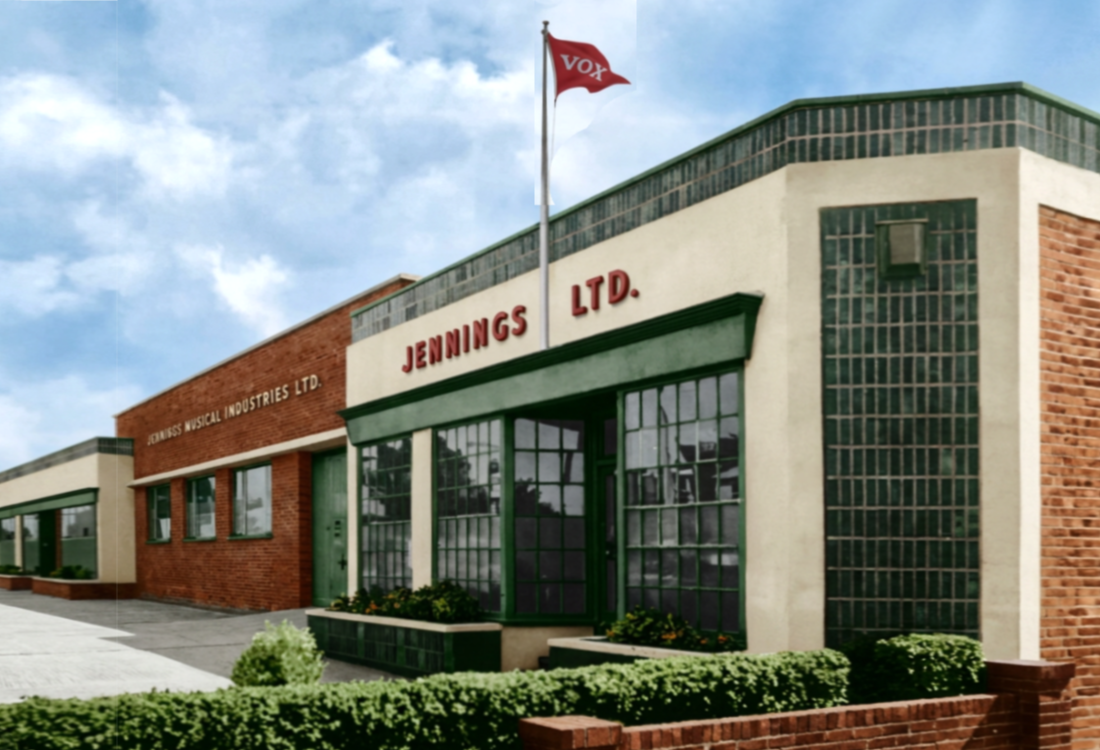 The Jennings factory at 117-119 Dartford Road, Dartford, Kent |
In July of 1962 two young lads from Liverpool would acquire their very first VOX amplifiers, an AC15 Twin and an AC30 Twin. Dick Denney even specially designed treble booster circuitry that mounted on the back of the amplifier cabinet, a design feature that was later incorporated into the main amp as a "top boost". The original coverings were a tan coloured vinyl that Brian Epstein had replaced with black at a shop in Manchester early in 1963.
Another feature was a chrome stand that raised the amplifier off the floor, improving its projection in large venues. Later that year, the group would emerge from the studio with a song called Love Me Do and change the world of popular music forever. The unforgettable sound of their jangling guitars would become the standard for great guitar tone for decades to come. This song, and the frenzy that was to follow this young group, would result in VOX becoming the most sought after guitar amplifier in the world. The massive success achieved by VOX in the 1960s laid the foundation for the legacy that continues to thrive nearly 70 years later. Many of the same amplifiers that artists relied on back then are still going strong today — amplifiers like the AC4, AC15, and AC30 are still the most popular VOX products amongst guitarists seeking that classic chime. |
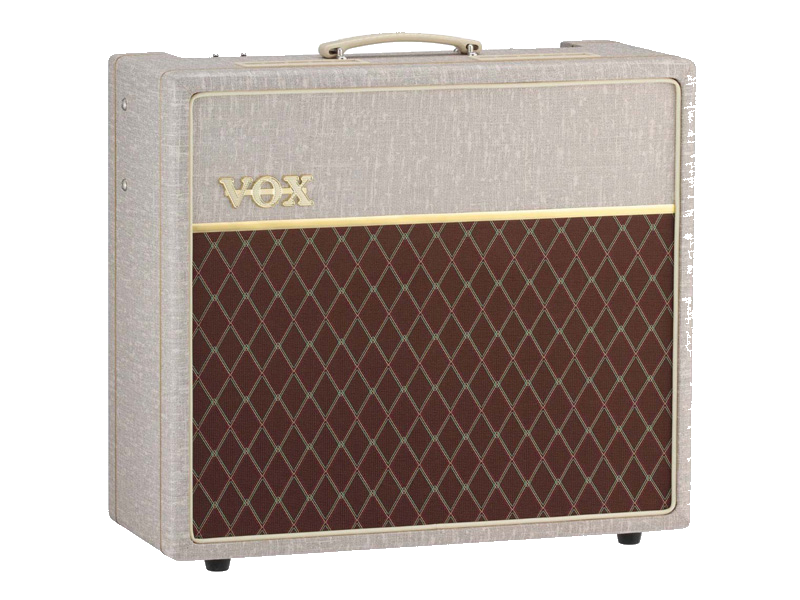 VOX AC-15 Handwired |
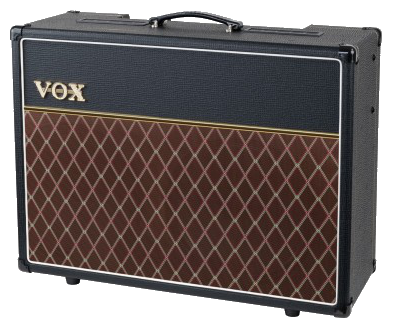 VOX AC-30 |
The Board of Trade embargo on American luxury goods was finally lifted in 1960, and the American guitars that British rock 'n 'rollers lusted after started to appear in the UK. At the same time there was a growing market for more powerful amplifiers and PA systems to cope with bigger venues. Engineers like Charlie Watkins, Jim Marshall and Dick Denney at Jennings started to evolve the equipment that would make the "British Invasion" heard around the world and earn them their place in rock 'n' roll history. |
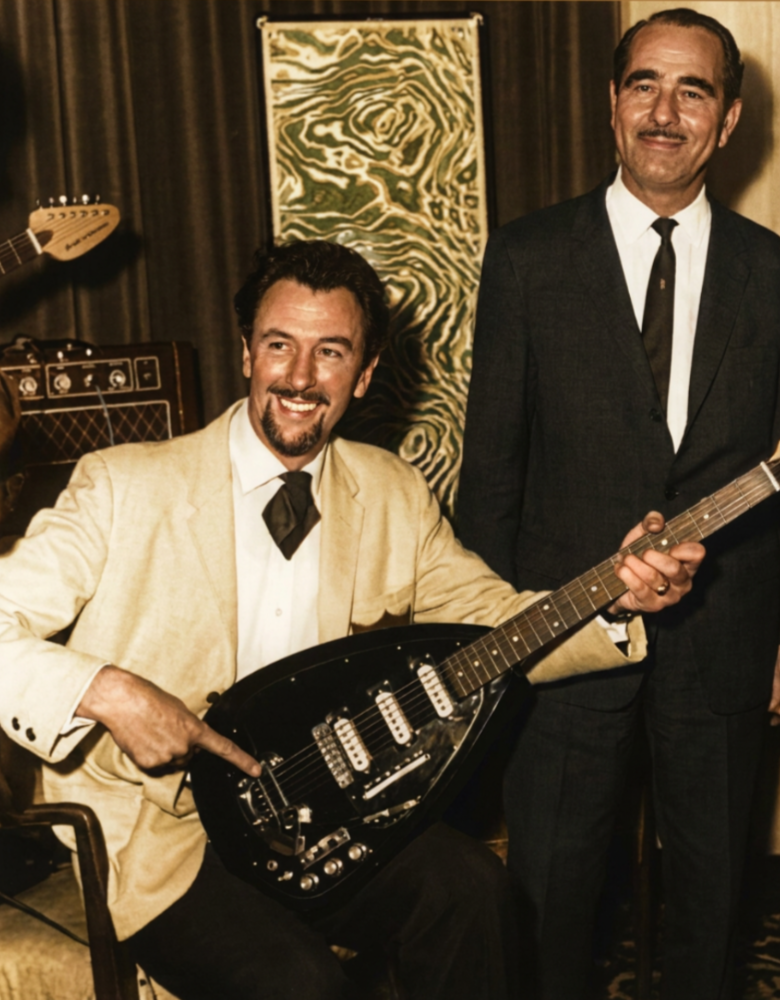 Dick Denney on national television in the USA |
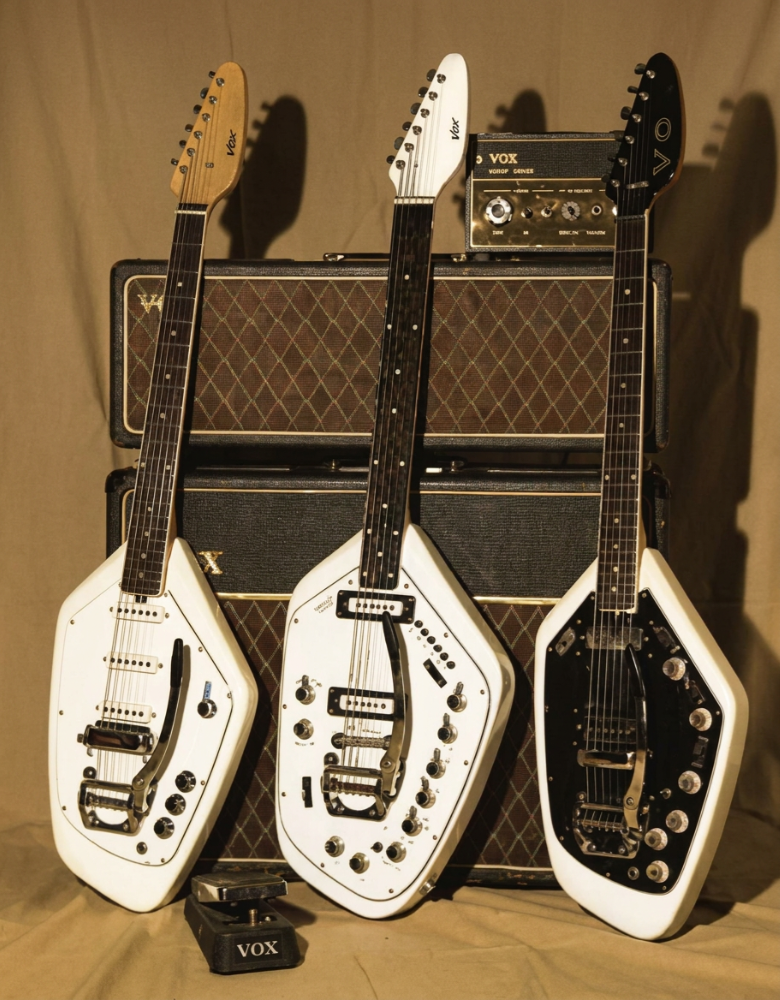 The Jennings factory at 117-119 Dartford Road, Dartford, Kent |
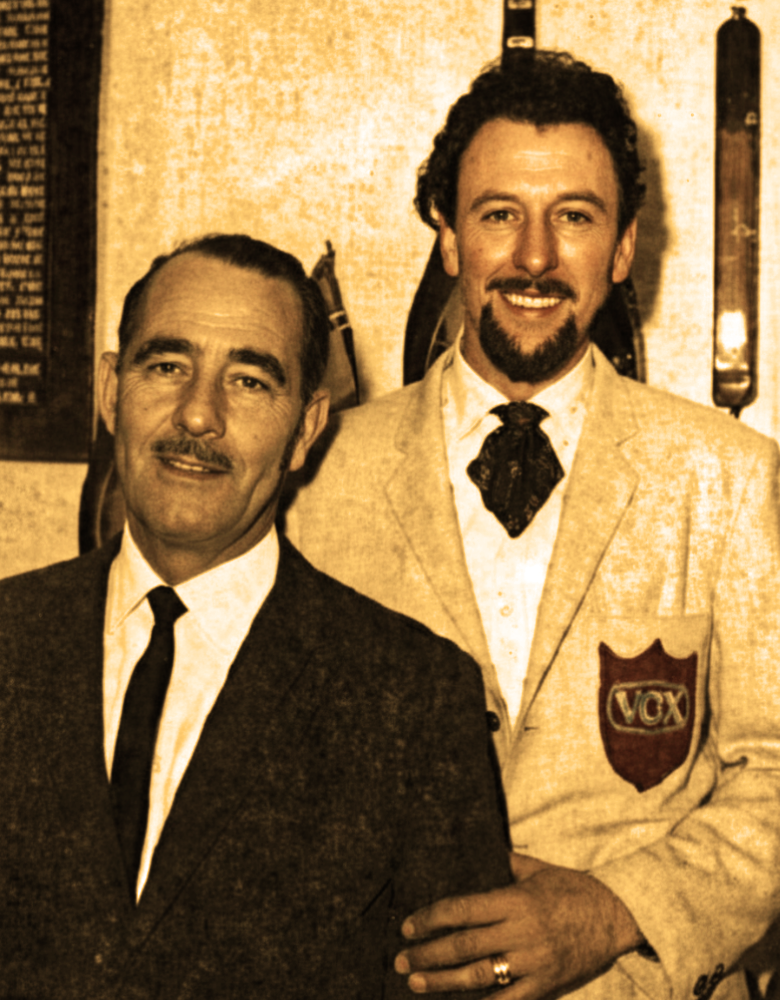 Dick Denney on national television in the USA |
By 1967 Jennings had been removed and Denney had left the company, which filed for bankruptcy in 1968. During the bankruptcy proceedings some of the former JMI management were permitted to resume production of the more recently introduced solid state amplifier designs under the name VOX Sound Equipment Ltd (VSEL). Although some hand-wired AC-30 and AC-50 amplifiers were made, no other new models were introduced and they had a problem with the fact that the solid-state amps just didn't sound the same as the valve-based ones. The company name was shortened to VOX Sound Limited (VSL) and itself filed for bankruptcy in 1969. During this bankruptcy period the company assets were held by the British banking firm Corinthian Securities and the only new product produced was an updated version of the Jaguar organ which was marketed under the name Corinthian. VOX was purchased by Birch-Stolec Industries in 1970 and the manufacturing base was again moved, this time to Hastings in Essex. Birch Stolec were the owners of Lemark Transformers who were one of the major creditors from the VSL bankruptcy. They retained the VSL brand under which they produced the V100 Head (a 100 watt, printed circuit, all tube amplifer) and PC board versions of the AC-30 and AC-50. Also produced at this time were minor version revisions of the solid state VOX amplifiers originally produced by JMI in 1967. Former bass guitarist of the Dave Clark Five, Rick Huxley, became the sales manager for the new productions. In 1973 Dallas Musical Industries (Dallas Arbiter), who produced the Sound City amplifier, bought VOX from Birch-Stolec. They replaced the PC board AC-30 and AC-50 amplifiers (which had a number of problems), with hand wired models rather similar to the original JMI designs. DMI also introduced the AC-120 and Escort 30 amplifiers. In 1978 DMI sold VOX to Rose Morris (the distributor of Marshall amplification equipment throughout Europe in the 1970s), who bought the company as a 'safety net' against losing their distribution contract with Marshall. The name of the company was again shortened, becoming VOX Limited under which they introduced the V125, the Escort 50, the Venue and "Q" series of amplifiers and further modifications of the AC-30. Korg eventually purchased VOX from Rose Morris in 1993, starting a new era of increased production and innovation. |